
Mastering Minimalism: Unveiling the Elegance of Abstract Art Through Simple Techniques
Abstract art has long captivated audiences with its ability to evoke emotions, provoke thoughts, and challenge perceptions without relying on representational forms. When infused with minimalist techniques, this genre reaches new heights of sophistication, emphasizing the philosophy that less truly is more. In this comprehensive exploration, we'll delve into the essence of creating abstract art using minimalist approaches, drawing inspiration from historical pioneers and practical methods. Whether you're a budding artist or an art enthusiast, understanding these techniques can transform your appreciation and creation of art. We'll cover the historical context, core principles, step-by-step guidance, influential artists, practical tips, benefits, and more, all while highlighting how simplicity can yield profound impact.
The Historical Roots of Minimalism in Abstract Art
Minimalism as an art movement emerged in the mid-20th century, primarily in the United States, as a reaction against the expressive excesses of Abstract Expressionism. Artists sought to strip art down to its fundamental elements—form, color, line, and space—eliminating any superfluous details that could distract from the viewer's direct experience. This shift was influenced by earlier modernist movements, such as De Stijl in the Netherlands, which championed geometric abstraction and primary colors.
In abstract art, minimalism encourages a focus on purity and objectivity. Unlike more chaotic abstract styles that layer complex narratives, minimalist abstract art invites contemplation through restraint. Pioneers like Kazimir Malevich with his Suprematist compositions laid early groundwork, but it was post-World War II artists who fully embraced this ethos. Today, minimalist abstract art continues to influence contemporary design, from digital graphics to interior decor, proving its timeless appeal.
Core Principles of Minimalist Abstract Art
At its heart, minimalist abstract art revolves around a few key principles that guide creation and interpretation:
- Simplicity in Composition: Every element must serve a purpose. Extraneous details are removed to allow the core idea to shine.
- Balance and Harmony: Achieving equilibrium through careful placement of shapes and colors.
- Emotional Resonance: Even with minimal elements, the artwork should stir feelings or ideas in the viewer.
- Material Integrity: Honoring the medium itself, whether canvas, paint, or sculpture, without over-manipulation.
These principles ensure that the artwork communicates efficiently, often leaving room for personal interpretation.
Step-by-Step Techniques for Creating Minimalist Abstract Art
Creating minimalist abstract art isn't about random strokes; it's a deliberate process. Here's a detailed guide to get you started, expanding on foundational methods.
- Conceptualize Your Core Idea: Begin with introspection. What emotion or concept do you wish to convey? Serenity might be represented by a vast empty space with a single horizontal line, while tension could arise from asymmetrical shapes. Journal your thoughts or sketch rough ideas on paper. This step is crucial because minimalism demands clarity—without a strong concept, the simplicity can feel empty rather than intentional.
- Select a Restricted Color Palette: Colors carry immense weight in minimalism. Opt for monochrome schemes or limit yourself to two or three hues. For instance, a stark black-and-white composition can explore contrast and duality. Consider the psychological impact: blues evoke calm, reds suggest energy. Experiment with shades and tones within your chosen colors to add subtle depth without complexity.

- Incorporate Negative Space: Often called "white space," this is the unpainted or unoccupied area that frames your elements. It creates breathing room, enhancing focus on the positive forms. In practice, sketch your composition and intentionally leave 60-70% of the canvas blank. This technique draws from Eastern philosophies like Zen, where emptiness symbolizes potential and peace.
- Employ Basic Geometric Shapes and Lines: Stick to fundamentals—circles for unity, squares for stability, lines for direction. Arrange them thoughtfully to create rhythm or imbalance. Use tools like rulers or stencils for precision, ensuring clean edges that amplify the minimalist aesthetic.

- Add Subtle Texture for Depth: While minimalism avoids clutter, texture can introduce intrigue without overwhelming. Apply paint with a palette knife for impasto effects, or incorporate mixed media like sand or fabric subtly. The goal is tactile interest that complements, not competes with, the forms.

- Master the Art of Restraint: The final step is editing. Step back from your work periodically and ask: Does this addition enhance or dilute the message? Many artists set rules, like using no more than five elements, to enforce discipline.
Influential Artists and Their Masterpieces
Several artists have defined minimalist abstract art, offering endless inspiration:
- Yves Klein: Famous for his monochromatic works, particularly in "International Klein Blue," Klein's pieces like IKB 79 use pure pigment to immerse viewers in color as an experience rather than an object.
- Piet Mondrian: A De Stijl founder, his grid-based compositions reduce reality to vertical and horizontal lines with primary colors, as seen in Composition with Red, Blue, and Yellow.
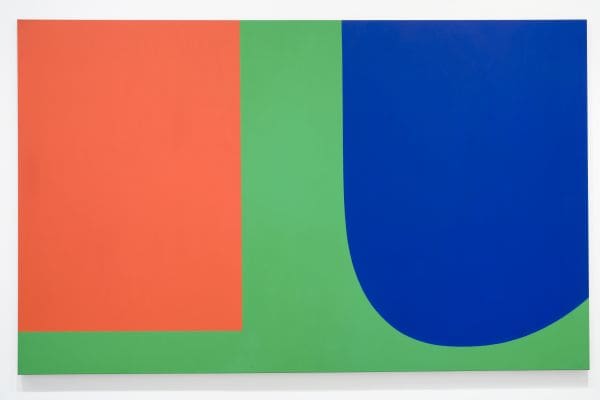
- Ellsworth Kelly: Kelly's bold, flat color fields and shapes, such as in Spectrum V, play with perception through negative space and vibrant contrasts.
- Frank Stella: Known for his "Black Paintings" series, Stella introduced shaped canvases and metallic paints, adding dimensionality while maintaining minimal forms.
- Donald Judd: Judd's sculptures, like his stacked boxes, emphasize industrial materials and serial repetition, blurring the line between art and object.
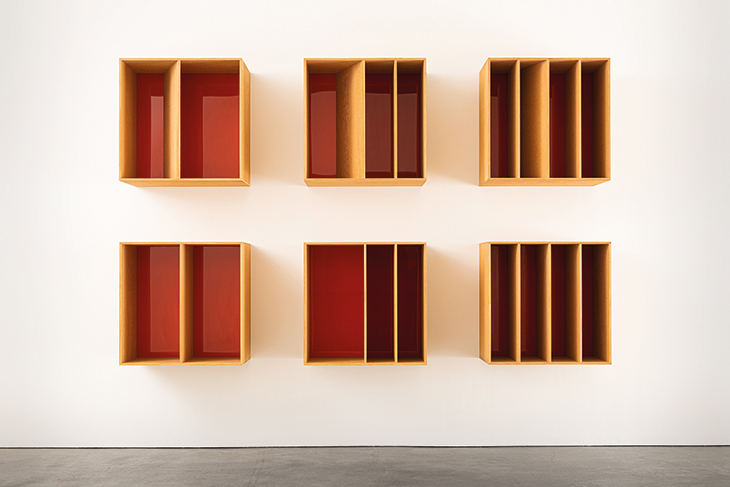
These artists demonstrate how minimalism can be both accessible and profound, influencing fields beyond fine art, including graphic design and architecture.
Practical Tips for Aspiring Artists
To bring these techniques to life:
- Gather Basic Supplies: Start with acrylic paints, a canvas, brushes, and a palette knife. No need for fancy tools—minimalism thrives on basics.
- Practice Iteratively: Create multiple small sketches before scaling up. Iterate by removing elements each time.
- Seek Feedback: Share your work in online communities like Reddit's r/AbstractArt for constructive input.
- Experiment Digitally: Use software like Adobe Illustrator for vector-based minimalism before committing to physical media.
- Incorporate Mindfulness: Approach creation meditatively to align with the serene nature of minimalism.
Remember, mistakes are part of the process; over time, you'll develop an intuition for balance.
The Benefits of Embracing Minimalism in Abstract Art
Adopting minimalist techniques offers numerous advantages:
- Enhanced Focus: By limiting elements, artists and viewers alike can concentrate on the essence, leading to deeper emotional connections.
- Accessibility: It's beginner-friendly, requiring fewer resources and less technical skill than detailed realism.
- Versatility: Minimalist abstract art fits various contexts, from gallery walls to home decor or digital NFTs.
- Therapeutic Value: The act of simplifying can reduce stress, promoting mindfulness and clarity.
- Timeless Appeal: Such works often age well, avoiding trends in favor of universal principles.
In a world overloaded with information, minimalist abstract art provides a visual respite, fostering contemplation and peace.
Conclusion
Mastering minimalist techniques in abstract art is about harnessing the power of restraint to create works that resonate deeply. By starting with a clear concept, curating your palette, embracing space, and drawing from legendary artists, you can produce art that's both elegant and evocative. This approach not only simplifies the creative process but elevates it, proving that profound beauty often lies in the uncomplicated. Whether you're painting for personal fulfillment or public display, let minimalism guide you toward creations that speak volumes with whispers.
FAQ
What is the difference between abstract art and minimalist art?
Abstract art avoids representational imagery, focusing on forms, colors, and emotions. Minimalist art is a subset that emphasizes extreme simplicity, often using geometric shapes and limited elements, but it can be abstract or not.
Do I need formal training to create minimalist abstract art?
No, formal training isn't necessary. Many successful artists are self-taught. Start with basic techniques and practice regularly to develop your style.
What materials are best for beginners in minimalist abstract painting?
Acrylic paints are ideal due to their quick drying time and versatility. Pair them with canvas panels, basic brushes, and a palette for mixing.
How can I sell my minimalist abstract artworks?
Platforms like Etsy, Saatchi Art, or Instagram allow direct sales. Build a portfolio, engage with art communities, and consider local galleries for exposure.
Are there any common mistakes to avoid in minimalist art?
Over-adding elements is the biggest pitfall. Also, ensure your composition has intentional balance—random placement can make it feel unfinished rather than minimal.
Can minimalist abstract art incorporate digital elements?
Absolutely! Tools like Procreate or Photoshop enable digital minimalism, often blending with traditional methods for hybrid works.
Image sources: All images sourced from respective webpages as indicated in captions, with credits to original artists and platforms.